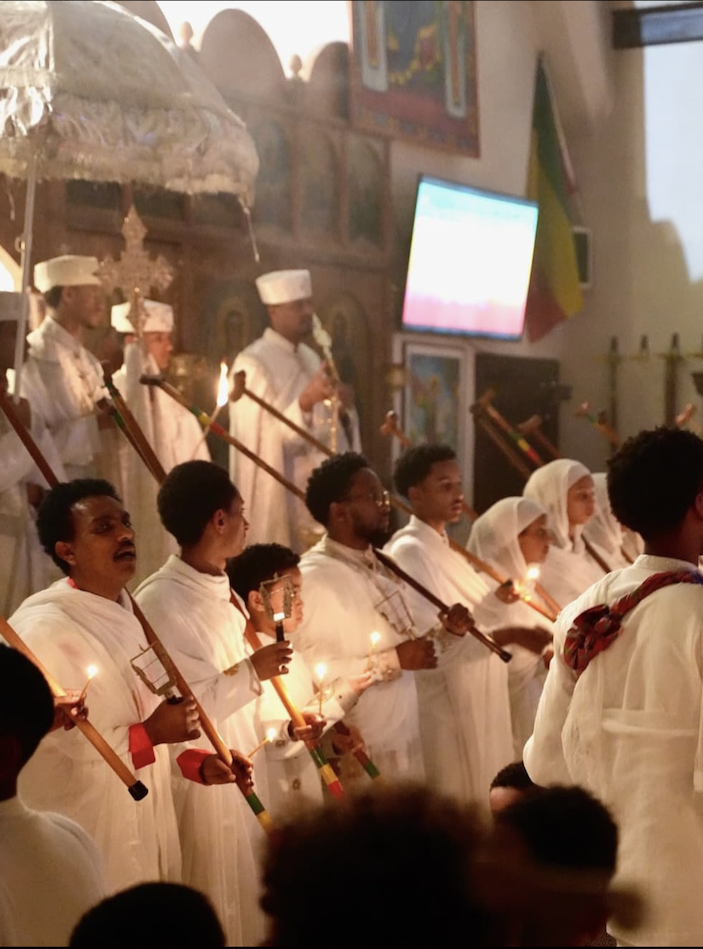
January 7 is the day Ethiopians around the world come together to celebrate Ethiopian Christmas. The holiday marks the birth of Jesus Christ and is deeply rooted in faith, tradition, and community. Many people begin their day early by attending long church services focused on prayer and reflection. Worshippers often wear traditional white clothing called a kemis, creating a strong sense of unity. For many families, the church service is the most meaningful part of the celebration, especially after many weeks of fasting and prayer.
I asked my grandmother about Gena and its traditions. When I asked her, “What does Gena mean to you?” she replied, “Gena is a very special day for me. It is not just about celebrating Christmas; it is a reminder of my childhood. It centers on our faith, spending time with family, and giving thanks.”
After church, families return home to share a meal and spend time together. Traditional dishes such as doro wat and injera are served. Families gather in their homes, filling the day with conversation and laughter. Children and young adults also play a traditional game called gena, which has been part of the holiday for generations.
Gena in Ethiopia is unlike many other Christmas traditions. It is centered on simplicity and spiritual meaning rather than gifts. It is a time to reflect on faith, appreciate family, and strengthen bonds with others. If you ever hear people greet one another with “Melkam Gena,” understand that it is more than a phrase—it is a symbol of tradition, culture, and celebration.